
How many portable toilets do I need?
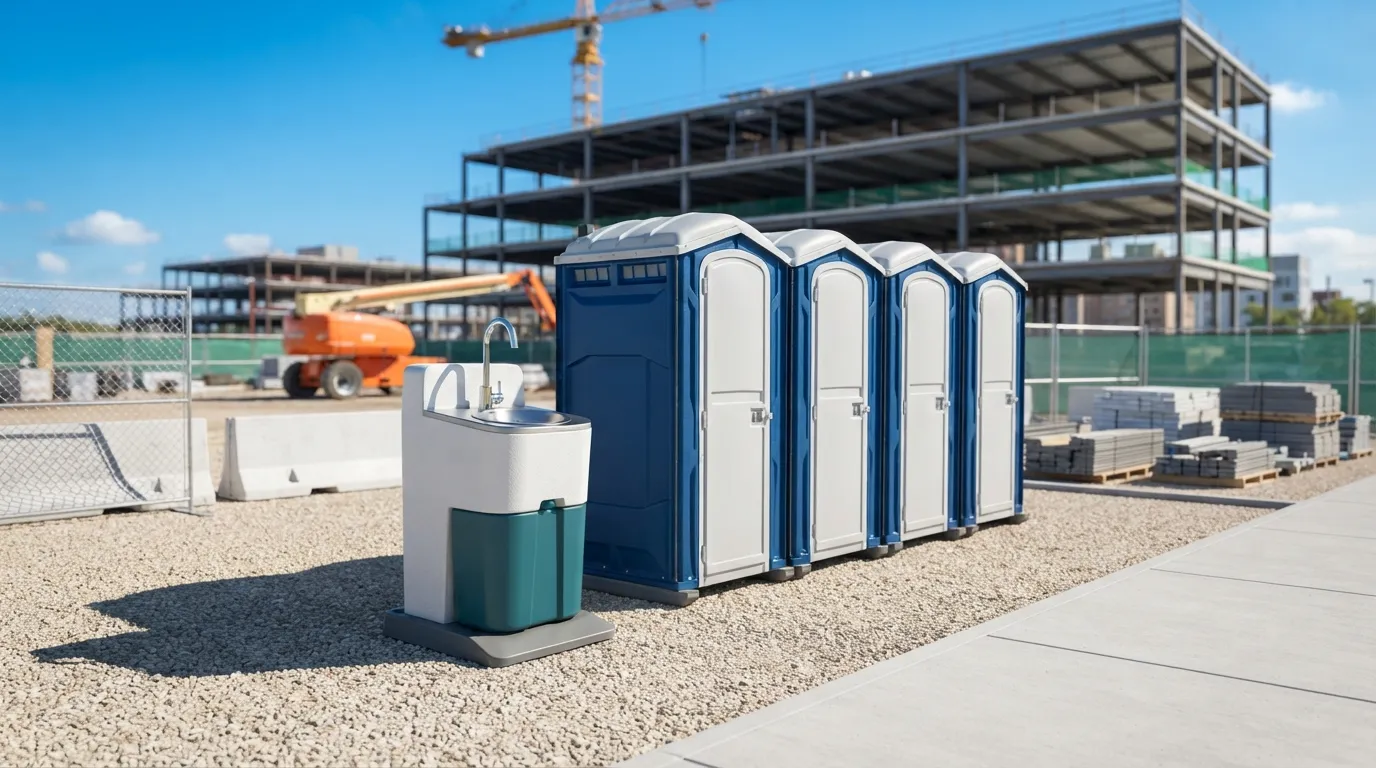
The answer depends on how many people you're serving and for how long. For construction sites, OSHA 1926.51(c) sets the baseline: one toilet facility for 20 workers or fewer; one toilet seat and one urinal per 40 workers from 20 up to 200; then one per 50 workers at 200 or more. A standard portable toilet holds 60 to 70 gallons and stands about 92 inches tall, so it fits in tight spaces. Event restroom rentals require different math based on expected attendance and how long guests will stay. A wedding restroom rental or festival restroom rental draws a crowd for a few hours, and we size based on attendance and restroom time. Call us with your headcount and we'll tell you what to rent. The math is faster over the phone than guessing, and undersizing on the day costs you more in service fees than sizing right at the start.
What does a porta potty cost per day, week or month?
Pricing moves with your rental length. A standard unit runs between 100 and 350 dollars per day depending on location and service frequency, 130 to 500 dollars per week, and 125 to 325 dollars per month. Monthly porta potty rentals cost less per day than weekly rates. Deluxe flushable models cost more, 85 to 1,200 dollars per day, making them popular for wedding restroom rental and premium events. ADA accessible units sit in the 200 to 400 dollar per day range. Longer rentals always cost less per day than shorter ones. A monthly rental beats renting by the week, and renting by the week beats daily rates. Delivery runs 50 to 500 dollars depending on how far from our Waterloo yard the job is and whether you need weekend service. Check emergency porta potty rental if your job starts on short notice. Ask for a quote tied to your exact dates.
When should I pump my septic tank?
A residential septic tank is typically pumped every 3 to 5 years, but that depends on tank size and how many people live in the house. See how often to pump a septic tank for details on your system's schedule. Watch for septic tank warning signs like backed-up toilets or slow drains, which mean the tank is already full and costs more to fix than a planned service. We do septic pumping, septic tank cleaning, and grease trap pumping in Waterloo. A grease interceptor reaches its limit when fats, oils, grease and solids hit 25 percent of the liquid depth, and commercial kitchens usually pump monthly or every other month. If you've never pumped your tank or you don't know when the last pump was, call now. It's cheaper than learning the hard way.
What can't go in a dumpster?
Anything hazardous stays out: paint, batteries, propane, asbestos, motor oil, tires and electronics. Most roll-off dumpsters in Waterloo take construction debris, yard waste and household junk, with dumpster sizes ranging from 10 to 40 yards. Liquid waste, medical waste and radioactive material are absolute no-gos. Your rental agreement spells out what's banned for your specific job, so read it. Overloading also costs you; dumpster weight limits vary by size and material type. If you're unsure, ask before you toss it. See what cannot go in a dumpster for a full list of prohibited items. We've seen jobs delayed because someone filled a dumpster with the wrong load.
Do I need a permit to put a porta potty on my property?
That depends on whether it sits on your private land or in the public right of way. Placement in the public right of way needs confirming with the city of Waterloo. We've placed units at dozens of Waterloo job sites and offer portable restroom rental across the area, but you'll want to check local rules for your exact address. Call Waterloo Porta Pros with your location and we'll tell you what paperwork you need. Most residential renovations, home renovation porta potties, and private events don't require permits, but commercial sites often do. Getting it wrong costs time and fees, so ask first.
Next step
Get a delivery date
Tell us the address, the dates and the headcount. We size the order and confirm the route.