
How Do Porta Potties Work?
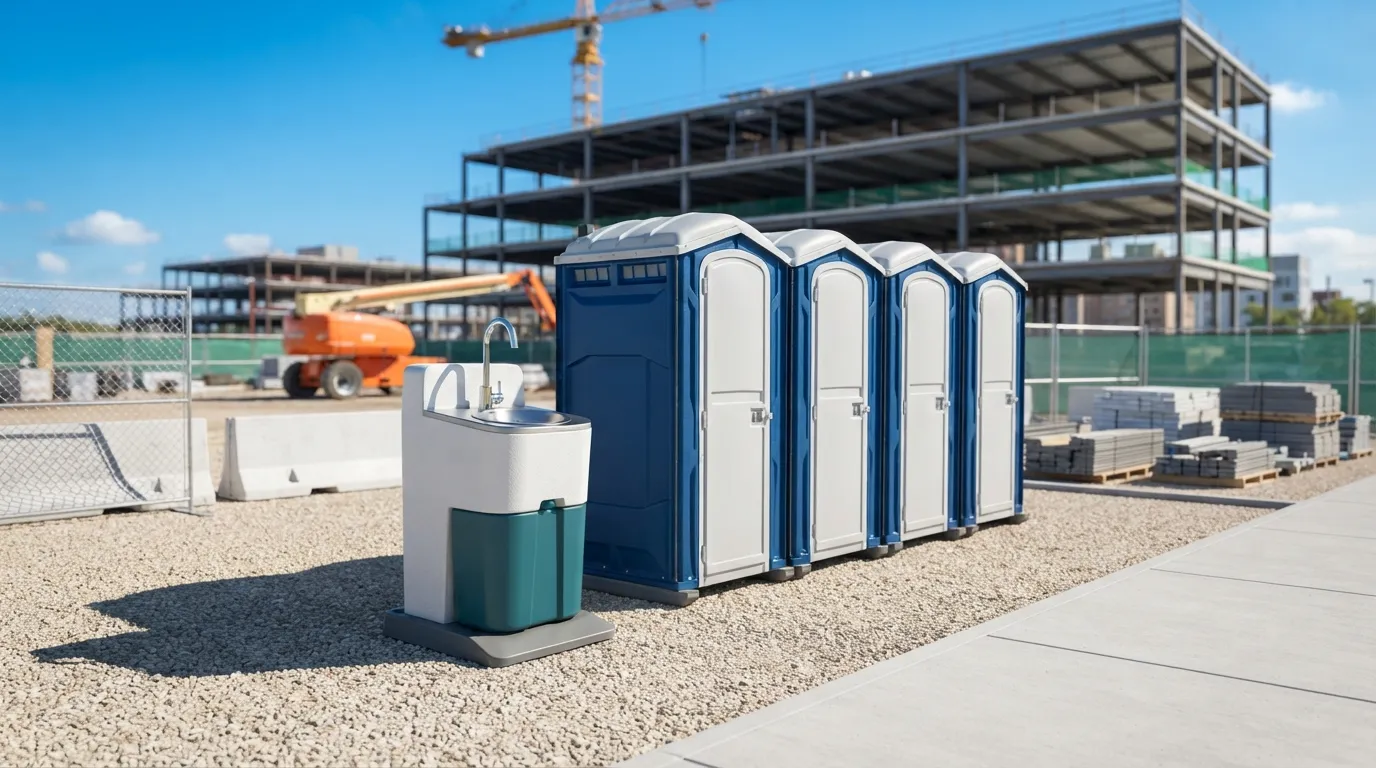
The basic unit is simple on purpose. Waste drops into the holding tank, the chemical treatment breaks it down and knocks back the smell, and a vent pipe running up the back wall carries odor above head height instead of into the stall. There is no water hookup and nothing to flush. A standard unit measures about 44 by 48 inches on the ground and stands roughly 92 inches tall, which is why it fits on a job site, a driveway, or a tight lot near downtown Waterloo without needing a lot of clearance. Inside you get a seat, a door latch, sometimes a hand sanitizer dispenser, and enough headroom for a full-grown adult. For a construction worker running to a porta potty between tasks, speed matters more than anything else, and that is the whole design goal: get in, get out, no waiting on a water line or a septic hookup. If you are trying to figure out how many you need for your crew size, our guide on how many porta potties you need walks through the OSHA math. For the mechanics of a nicer unit with a flush handle, see how deluxe flushable porta potties work.
How Does a Portable Sink Work?
A portable sink runs on a fresh water tank and a foot pump or hand pump, no plumbing required. Push the pump, water flows to the faucet, and greywater drains into a separate holding tank underneath instead of the ground. Soap sits in a built-in dispenser and towels or a hand-drying device are required alongside it under 29 CFR 1910.141(d)(2), which specifically states hand sanitizer does not satisfy that rule on its own. That is why a construction crew working with paints, coatings, herbicides or insecticides needs actual washing facilities on site under OSHA 1926.51(f)(1), not just a bottle of sanitizer clipped to a fence post. We rent these as standalone units or paired with restroom setups; see handwashing station rental or portable sink rental for the standalone option. Event organizers in Waterloo often add one near food vendors, and general contractors add one near paint and coating work specifically to stay inside that OSHA language.
How Do Flushable and Camping Porta Potties Work?
A deluxe flushable unit adds a fresh water tank and a foot pump that pushes a small rinse into the bowl with each use, so waste clears the bowl instead of sitting there between services. It still drains into the same sealed holding tank as a standard unit, it just handles higher traffic with less buildup. Camping versions work the same way but scale down, built for a tent site or a RV pad rather than a job site, and they hold up fine on gravel or grass as long as the ground is reasonably level. If you are stocking a weekend campsite, a single unit usually runs in the range you would expect for a short rental, and our camping porta potty page covers placement on uneven ground. For anyone comparing the flush feature against a standard unit before a wedding or backyard party, the deluxe flushable page breaks down what the extra water tank buys you over a standard porta potty rental.
What Chemicals Are Used to Clean Porta Potties?
Service techs use a blue deodorizing and digesting chemical in the holding tank, plus separate cleaning chemicals to wipe down the seat, walls and door handle on each visit. The tank chemical is what breaks down solids between pump-outs, and it is also what gives porta potties that recognizable blue-water look. Search for "portable toilet chemicals near me" and you will mostly find the same class of product every route driver uses: biocide-based, deodorant-forward, safe for the plastic tank. ANSI/PSAI Z4.3 sets a baseline service interval of once per week for up to 10 users across a 40-hour week, and Waterloo Porta Pros schedules pump-outs to that standard or tighter depending on headcount. For a septic tank rather than a portable unit, the chemistry is different and the schedule is longer; a residential septic tank is typically pumped every 3 to 5 years depending on tank size and household size, which our septic pumping service page covers, along with how often to pump a septic tank for the longer version of that answer. Curious how often we hit a rented unit specifically, not a septic tank? Check how often porta potties are cleaned.
Job sites still have to hit OSHA's toilet ratio under 1926.51(c)(1): one facility for 20 workers or fewer, then one toilet seat and one urinal per 40 workers as headcount climbs, one per 50 once you pass 200 workers. That rule, plus our OSHA requirements page, is worth reading before you order for a big crew. Renting near Cedar Falls, 6.7 miles west of Waterloo, or Evansdale, 6.4 miles southeast, works the same way, our trucks cover Waterloo and the nearby towns we service on the same routes.
Do porta potties smell if serviced correctly?
Not much, no. The vent stack and tank chemical are designed to hold odor down between services, and a weekly pump-out under the ANSI/PSAI Z4.3 baseline keeps most units from building up smell at all. Heat and heavy use push that timeline tighter. See our full answer on porta potty smell.
How do porta potties work without plumbing?
They do not connect to a sewer line at all. Waste and chemical sit in a sealed tank under the seat until a vacuum truck pumps it out on schedule. That is the entire system, no pipes, no water line, no septic field required on site.
Can I rent a portable sink without a full restroom trailer?
Yes. A standalone unit with its own fresh and greywater tanks works fine next to a row of standard units or on its own near a food booth. See portable sink rental for standalone pricing and setup.
What is the difference between a porta potty and a restroom trailer?
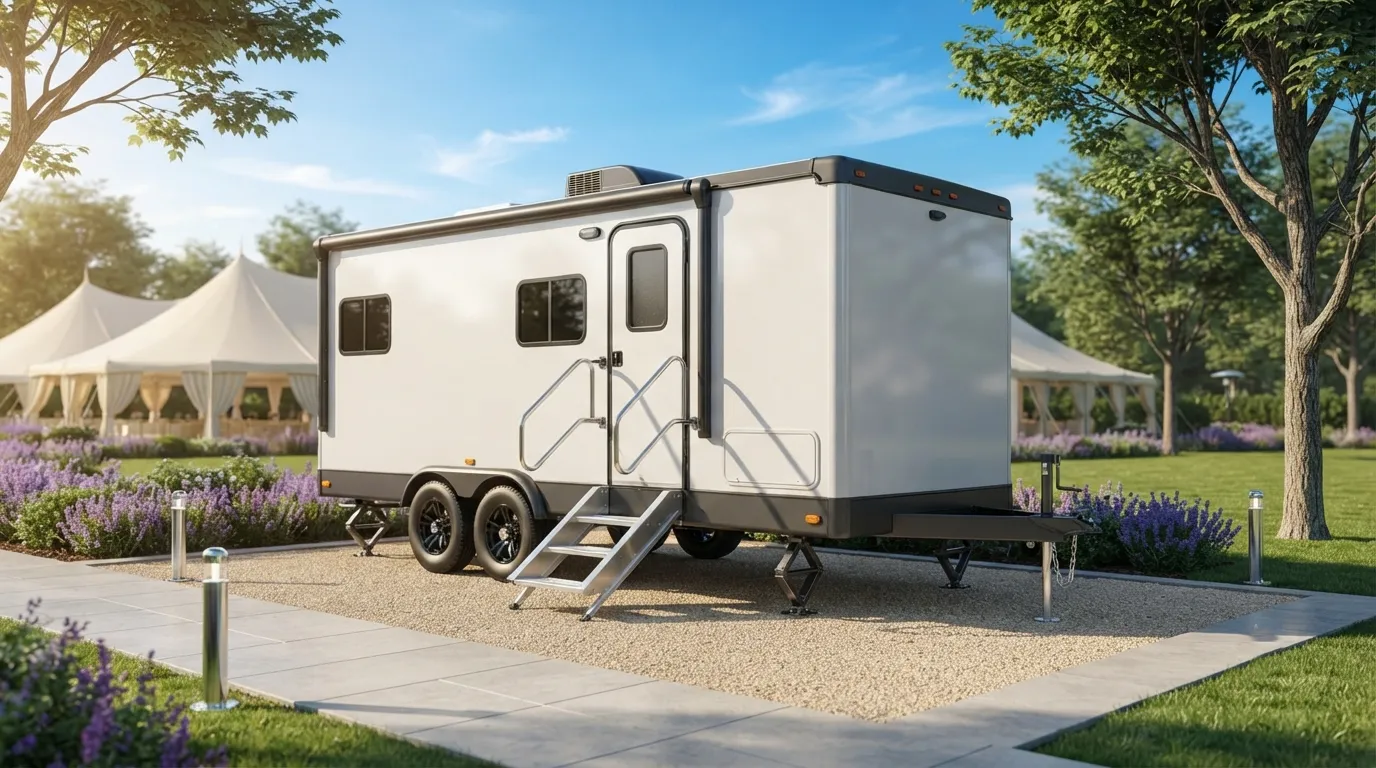
A porta potty is a single sealed unit with no plumbing. A restroom trailer runs real plumbing, sinks and often climate control across multiple stalls. Compare options on restroom trailer rental if you need higher-end fixtures for a wedding or corporate event.
Do camping porta potties need a level site?
They work best on flat, stable ground so the tank does not shift and the door swings clean. Gravel pads and mowed grass both work. Uneven or soft ground can tip a unit, so check placement before delivery on our placement guide.
Next step
Get a delivery date
Tell us the address, the dates and the headcount. We size the order and confirm the route.